


Kinga Zemła in conversation with Aleksandra Wasilkowska
Kinga Zemła: The city originates from the granary, or at least that is what Philippe Rahm claims in A Natural History of Architecture. In ancient Mesopotamia and Egypt, and later in medieval Europe, cities developed around a fortified granary located in a temple or monastery. Inside, farmers stored their harvests to protect them from invaders and bad weather. In its role as provider, the agricultural landscape is therefore fundamental to the city. The dichotomy between city and countryside does not seem to be an effective tool of imagination in strategic spatial planning.
Aleksandra Wasilkowska: Sébastien Marot puts forward the hypothesis that the architecture of Doric temples, including the Parthenon, was a monumental transformation of rural granaries: columns were modelled on posts, and triglyphs on ventilation openings. This line of thought leads to the conclusion that the history of Western architecture originates not in the representation of power, but in the infrastructure of food security and the typology of grain storage. The city–countryside dichotomy that dominates the contemporary imagination results from the mistaken assumption that they are two separate realities.
Maciej Jakubowiak observed that the history of humanity can be told through the metaphor of the “people’s belly”, that is, through references to colonialism, serfdom, class struggle, but also as a history of hunger and the struggle for access to food.1 Hunger, the destruction of agriculture, and supply blockades continue to serve as weapons. Today, global hunger and malnutrition coexist with the waste of more than one-third of all food produced. Carolyn Steel notes that, in the most developed countries, hunger has been replaced by obesity, a consequence of eating processed food, environmental pollution, but also expanding food deserts.

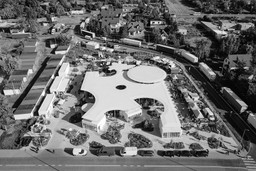
Photo: Nate Cook
KZ: The rigid division between city and countryside corresponds even less to reality since food production and distribution have been harnessed to the practices of global capitalism. Food is still relatively cheap. Low prices do not reflect the social and environmental costs of food production. Most often these costs are borne by residents and ecosystems in distant parts of the planet. Polish livestock are fed with soy-based feed, and extensive cultivation of this crop requires the clearing of further areas of the Amazon rainforest. In architectural debates, ideas have emerged about internalising the costs of construction, for example by taking into account the degradation of the landscape from which building materials are obtained.2 Should we think about food in a similar way? Should we accept higher prices?
AW: Fair food, meaning accessible and healthy food, requires systemic support. In a broader perspective, ecologically produced food is an investment in public health, reducing expenditures on treating the consequences of poor nutrition. Many instruments could increase the availability of organic food if they were implemented. Urban planning and architecture should become involved in building the food system; much depends on them in this process: shortening supply chains and reducing the number of intermediaries between farmers and consumers, creating local neighbourhood centres with food markets, greengrocers, milk bars, and canteens. The spatial and property policies of cities should support places offering inexpensive, unprocessed, fresh food: neighbourhood greengrocers and milk bars. Preferential rents or rent subsidies and economic incentives could be applied. Health-oriented urban planning is of fundamental importance for access to healthy food and, consequently, for its price.
KZ: In this issue of Autoportret, we present four future scenarios forecast by Sébastien Marot. Do you find any of them convincing?
AW: Intensifying food production within city limits and the emancipation of urban residents through permaculture would certainly enrich the food landscape, but they will not replace professional agriculture outside the city. It is difficult for me to imagine the mass construction of urban vertical farms on a scale sufficient to feed the entire local population. Available land in city centres is diminishing and becoming increasingly expensive, while energy and water infrastructure would not be able to bear the burden of vertical farms. Hydroponics requires specialised knowledge and costly installations. Without subsidies, it would be accessible only to elites. We would risk creating a technological monopoly on food. I would place greater hope in urban gardening. As an added benefit, educational farms on rooftops, greenhouses and school gardens would restore the visibility of food production. They would provide a valuable element of food education, although I admit that they fascinate and frighten me at the same time. Recently, I visited the Belgian research centre Agrotopia, a cultivation laboratory and training facility for hydroponic agriculture. In their greenhouse, production is controlled by computers, and my guide described soil as taboo: “soil is bad, contaminated with heavy metals, oils, and corpses”. The plants are pollinated by bumblebees delivered in boxes and replaced every seven days because this is as long as they survive in captivity. The greenhouse looks impressive, but the bumblebee slavery saddened me. I am a vegetarian and I seek solutions that eliminate any form of animal suffering.

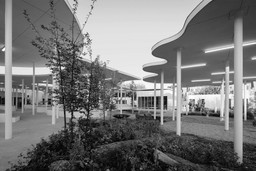
Photo: Nate Cook
Interesting experiments include the more community-oriented and neighbourhood-based urban greenhouses La Ferme du Rail in Paris and La Cité Maraîchère in Romainville, on the outskirts of the capital, subsidised by the local government. People who pay local taxes are entitled to a discount on food purchased from this greenhouse.
Small urban farms can serve social, educational, cultural, and integrative functions, strengthening residents’ awareness of food in a way analogous to museums and community centres. Supporting education and building awareness are the foundations of food security, including the protection of food-producing zones around cities and the shortening of supply chains. Regrettably, regional cooperation between cities and neighbouring municipalities is still lacking. Moreover, the European Union continues to invest four times more in subsidies for industrial-scale meat producers than in sustainable local plant cultivation.
KZ: The entanglement of food production in the logic of global capitalism and industrialisation leads to the homogenisation of food and deepens our dependence on transnational corporations.
AW: Global monopolists have appropriated economic relations with farmers and imposed their own rules on them, including in Poland. Agricultural producers sell their crops at prices many times lower than those charged in stores. Large players can be bypassed by building social food infrastructure: food exchanges for local farmers and processors, marketplaces, neighbourhood grocery stores, greengrocers, and vegetable vending machines. In smaller towns, one can still come across so-called farmers’ or peasants’ markets, but large cities are turning into food deserts, where high-quality unprocessed food is available only to a select few. Without subsidies, small enterprises have no chance of competing with corporations, especially since the latter often engage in unfair practices and price-fixing agreements.

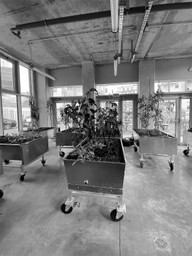
Photo: Aleksandra Wasilkowska
A food strategy should be an important a political objective, on par with combating pollution, traffic congestion, and noise. In Poland, work has begun on a strategy to reduce obesity, but it is progressing independently of spatial policy. Yet the success of the project depends on direct access to unprocessed products within walking distance, surely. It is unreasonable to expect changes in eating habits from people living in food deserts. The city’s task is therefore to lower rents and reserve municipal premises for grocery stores. Most greengrocers disappeared from central Warsaw during its modernisation ahead of the European football championship in 2012. Concerns about aesthetics outweighed concerns about health. The public interest requires that local stores offering inexpensive and healthy food be recognised as social infrastructure to be supported by local governments and the state, and treated accordingly. The effectiveness of such a solution is demonstrated by milk bars. Subsidised by the state, they serve inexpensive and unprocessed food, thereby helping to realise the principle of food justice.
KZ: In recent years, allotment gardens have experienced a renaissance. Poles combine food production with recreation, while in Sweden it is popular to rent tiny garden plots for vegetable beds. They are about two square metres in size. These home vegetable gardens are located between apartment blocks or in the courtyards of residential quarters. At one Polish architectural office, I proposed such a solution for a housing project, and was told that the only model that works in Poland is private allotment gardens.
AW: I believe it is the management model that determines whether a given solution works or not. An open greenhouse for an anonymous community would make little sense. Would residents devote their time to caring for plants only for someone to come one day and take them away? Such a garden should be overseen by designated individuals, ideally employed for that purpose, as in Romainville. People grow vegetables by choice; not everyone is passionate about it. I have enormous respect for those who acquire knowledge about plants or possess any agricultural skills; having said that, architects have no right to impose gardening as a lifestyle. What all of us may reasonably expect, instead, is that cities offer a choice of healthy and inexpensive food and access to it. That is why marketplaces interest me so much, and why I have devoted a large part of my professional practice to them.
Moreover, allotment gardens in Poland cover only 3.5 percent of the area of Polish cities and cannot feed their residents. Professional agriculture on a larger scale cannot be conducted during one’s free time after work. Urban agriculture and community gardening will remain niche activities; we should not expect them to replace well-designed food chains that directly connect professional farmers with consumers.
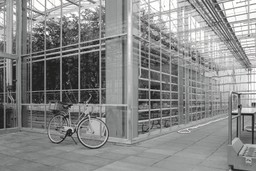
Photo: Aleksandra Wasilkowska
KZ: For Rzeszów and the centre of Chrzanów, you designed urban farms combined with housing. You’re not afraid of progressive solutions.
AW: For Chrzanów, I designed an urban farm and a fungarium on the roof of their market hall. I see a place for hydroponic production in modern marketplaces, primarily because of its educational value, its ability to make the process of edible plant growth visible, and its potential as a space for recreation and social integration. Of course, the roof of an average-sized market hall has an area of merely one or two thousand square metres, enough for some herbs, tomatoes, or mushrooms. We cannot fit the entire food pyramid there.
My master plan for Rzeszów focused on the renovation of the market hall. The infrastructure of many marketplaces, market halls, and greengrocer pavilions in Poland is outdated, but that doesn’t mean it is unnecessary. In Warsaw, marketplaces have been systematically eliminated for many years as relics of the post-socialist transition. The high costs of renovating historic market halls have resulted in a fairly repetitive model: merchants are pushed out, and commercial food courts move in. Markets were not considered sufficiently “prestigious”; according to the authorities, they did not fit the image of a modern city.
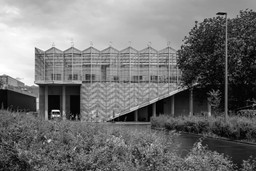
Photo: Krzysztof Kaczmarek
KZ: We now do most of our shopping in supermarkets. Poland is a significant exporter of food surpluses, yet retail trade within the country is conducted through foreign corporations. In Sweden, a food-importing country, local agricultural products are purchased and sold by an oligopoly of Swedish brands: ICA, Axfood, and COOP Sverige. Together, they control almost 90 percent of the market.3
AW: Carrefour is withdrawing from Poland. An idea emerged to buy out and nationalise its stores. Critics warn of the inefficiency of centralised management and the low competitiveness of such a network, citing the example of “Społem”. Yet alongside the risks, the idea of “Społem” and more than a hundred years of cooperative food retail history offer interesting inspirations. We need a profound reform of the food sector, government support for both farmers and consumers, and easier access to food produced from domestic raw materials in the immediate vicinity of where people live. In Poland, even villages are losing local grocery stores selling fruit and vegetables, while processed products are becoming increasingly common in farmers’ diets.
KZ: Food sold at markets does not always come from farmers or organic cultivation. Polish agriculture, too, has become dominated by industrial monocultures.
AW: At food markets and stalls in Warsaw, alongside farmers, the main vendors are traders who source their goods from Bronisze, the largest agricultural and food wholesale market in Central and Eastern Europe. More than 20,000 producers and farmers supply products there. Small vendors, producers, farmers − they are all needed. Family farms focus on cultivation and production work; they do not have time to engage in retail sales at markets. Small traders therefore play an important role in the supply chain. A good market manager, familiar with local supply networks, verifies vendors and establishes appropriate quality and pricing criteria, thereby eliminating bad practices. At the moment, domestic tomatoes cost 5 złoty per kilogram at Bronisze; in a Biedronka store only a few kilometres from the market, their price jumps to 25 złoty, meaning the margin reaches 80 percent.
KZ: You compare work on market projects to practising Open Form. At Bakalarska, Oskar Hansen’s theory seems to be literally embodied. When a specific area needs modernisation, traders move their stalls twenty or thirty metres away. You emphasise that they form a unique community. Once driven out of a market, they are unlikely to return. It is work on a living organism.

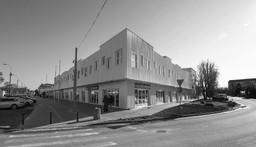
Photo: Antonina Gugała
AW: Time is the decisive factor. I have been working at Bakalarska for more than ten years; it is an exceptional place. The site belongs to the city, but it is managed from the bottom up by a strong multiethnic community of traders whose roots go back to the marketplace at the Stadion Dziesięciolecia (10th-Anniversary Stadium). At one time, that was the largest market in Europe; it was eventually closed down. As the marketplace develops, these people gradually rebuild and expand former industrial halls. I help the traders modernise and develop their enclave, but I have limited control over the ultimate form of the space. I had to learn the logic of the way of designing that is open to future expansion. The expansion will happen one day, but no one knows when; it is conditioned on the funding becoming available, along with the arrival of new interested traders. I take structural details into account: larger foundations that can bear additional loads, starters for new structures, windowless walls because one must anticipate the continuation of the street frontage. Most materials are selected with reuse in mind. Additional windows, either new or old, can easily be incorporated into the open composition and varied façade dimensions. Roofs are built using bolted structures and removable roofing systems. Many elements inside the marketplace are hung or altered by the traders themselves; restaurant garden pavilions, tarpaulins, and stalls appear. The fabric of the marketplace grows organically, without the architect’s control; pure form is out of the question.
Markets commissioned by local governments are designed in a completely different way, without taking into account the processes known from Bakalarska. Once grant funding becomes available, victory in the tender is determined by short completion times and low cost. Usually, the entire process − from concept to construction design to the building permit − must be completed within a few months. Contracts include penalties for delays. Under such conditions, working with the community is simply impossible, although I try to encourage local governments to engage in dialogue and consultations with traders. Such conversations are often accompanied by fear of losing one’s livelihood, they prolong the construction process, and result in another kind of fear − the fear of investment paralysis.
After twenty years of designing marketplaces, they still surprise me. Certain solutions that work at food markets, where products are sold directly from vehicles, make no sense in a multiethnic marketplace or in a city centre. For this reason, I try to advocate for a two-stage design process, beginning with consultations and a concept on the urban and architectural scale.
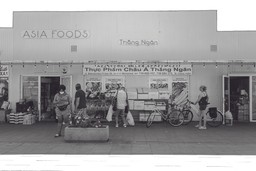
Photo: Antonina Gugała
KZ: You enter consultations with your own perspective as an architect who sees the marketplace within a broader urban context. You propose introducing greenery or additional functions to enliven the commercial space outside established market hours. Typically, such ideas are not welcomed by traders.
AW: Their priorities are low rents, convenient parking, sales, and maintaining a stable customer base. This is entirely understandable. I must consider a broader perspective: the public interest and the environment. Sometimes it is difficult to reconcile conflicting interests, to accommodate “more trees and more parking spaces”. Many marketplaces simply operate in open squares which remain empty for most of the day and week once trading has ended. One must find a formula for organising a friendly, green, and multifunctional public space there outside trading hours. Increasingly, marketplace owners are demanding additional functions: food outlets, small tailoring services, hairdressers, beauticians.
KZ: Residents of large cities and tourists increasingly expect authenticity of experience in addition to a diverse range of services. Fashionably revitalised spaces such as Hala Koszyki, though popular, do not satisfy the desire for authenticity, rawness, and the feeling that one is buying − as imagined locals do − truly fresh food or dishes straight from the frying pan. Markets and bazaars are subject to exoticisation. Therefore, they are spaces of integration, including intercultural integration. In Stockholm, the fruit and vegetable market and the surrounding shops selling Middle Eastern products provided me with an excellent reason to visit the district of Tensta. It is far from the city centre and inhabited mainly by migrants.
AW: Similarly, the Bakalarska marketplace in Warsaw and the Anderlecht Abattoir are important places for numerous diasporas − an inclusive, multiethnic belly of the city. Anderlecht is transforming from a former slaughterhouse into a multifunctional marketplace. On the roof of one of its market halls, Foodmet has built a greenhouse with hydroponic cultivation. At Bakalarska, various eateries serve dishes from around the world, and there is a food bank that prevents waste. Both marketplaces are sites of cultural ferment and innovation.
KZ: Access to products from one’s home country significantly helps immigrants become familiar with a new place. During eight years of living abroad, I experienced this myself. It is touching that the exhibition you are curating as part of the “Belly of the City” project will be shown, among other places, in Polish shops in Brussels.
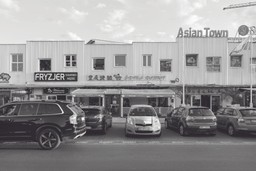
Photo: Antonina Gugała
AW: The exhibition is accompanied by an academic conference at the La Cambre Faculty of Architecture of the Free University of Brussels. I am interested in the edible and informal map of migration and the ways in which flavours and species of edible plants have travelled together with people, constantly reconstructing their memory and identity, while also creating new hybrid economies and ecosystems. I wish to present the food landscape associated with the Polish diaspora in Brussels, as well as Polish artists who redefine the notion of taste and identity. I already collaborated with some of the participants fifteen years ago on the Bazaristan exhibition in Wrocław. Janek Simon is preparing a performance at a market stall, creating sculptures of fictional hybrid vegetables and fruits using 3D printing technology. Through them, he will refer to the idea of synthetic identity, around which his artistic practice revolves. A Pickle Bar − a pop-up by Slavs and Tatars − will appear in the garage of a Polish family’s home. The Slavs and Tatars collective addresses themes of creative fermentation and explores language politics and identity at cultural borderlands. In a vegetable garden, we will eat a Mouldy Dinner − a performance by Pola Sutryk. Pola creates edible art and addresses the issue of food waste. In the display windows of Polish grocery stores, we will present, among other works, a geopolitical map of the world. Its author, Agnieszka Kurant, has depicted food and food products as a form of currency.
The exhibition and presentations of works by other artists will be dispersed across various spaces connected to the food landscape, but also to supply chains. Paintings by Karolina Jabłońska − The Beetroot Head and Red Preserves, depicting a female head in jars of pickles and beets − will travel from Poland to Brussels in a delivery van transporting food products. Karolina’s works may evoke the jokingly pejorative term słoik (“jar”), used to describe a person who moved to Warsaw from the provinces, but above all they refer to the metaphor of travel − in space and time. Jars of food can be taken on a journey, and the food sealed inside remains suitable for consumption for a long time. In a jar of preserves, the artist recognised a carrier of emotional baggage, memories of a grandmother and the orchard where the fruit grew. People pack a fragment of their former world, their former life, into jars and take it with them as a keepsake. The exhibition’s conclusion − a model of a prototype market hall that I designed − will incorporate these elements and, after the exhibition ends, will return to Warsaw like a jar of preserves brought back from a journey.
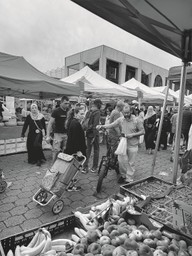
Photo: Aleksandra Wasilkowska
KZ: In many districts of Stockholm, including the one where I lived, there are dedicated fruit and vegetable stalls. Vendors know their neighbourhood customers, and shopping forms part of everyday social rituals. At the end of August, during pickling season, dill appears at the stalls. Vendors add it free of charge to the baskets of Polish customers. On these occasions, they always say that only Poles know what to do with dill.
You based your professional activity on the phenomenon of the disappearance of such places and, with them, neighbourhood social practices: as a young mother in central Warsaw, you were troubled by the gradual disappearance of stalls, greengrocers, and public toilets. Referring to the archetype of the shadow in Jungian psychology, you grouped these marginalised and tabooed places under the label of “shadow architecture”. In your opinion, is the architecture of everyday life gradually entering the discourse on space? And if so, do publications devoted to it − such as Grzegorz Piątek’s The Temple and the Dumpster and the issue of Autoportret dedicated to ordinariness − play a role in this process?AW: Grzegorz Piątek jokes that they will rebuild the Saxon Palace before they renovate the public toilet I designed in the Saxon Garden. Since the political transformation, I have the impression that little has changed. The issue has indeed appeared in architectural debates, but it still requires constant advocacy. Architectural competitions and new government-funded investment projects primarily concern buildings associated with prestige, power, or transportation. I treat part of my research and design activity as a form of activism aimed at improving the quality and accessibility of social infrastructure. By designing marketplaces, I take a stand in favour of food justice and the restoration of everyday architecture to its rightful status.
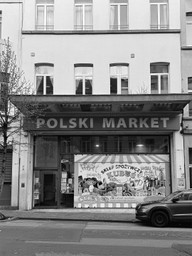
Photo: Krzysztof Kaczmarek


