


Magdalena Zych in conversation with Łukasz Łuczaj
The agricultural landscapes of contemporary Lesser Poland are ripe with the knowledge and memory of edible plants. On a boundary between cultivated fields and hay meadows near Miechów, my interviewee gathered a sizeable bundle of poppies for dinner just before they came into bloom. Before the time for fruits and seeds arrives, a diet based on cultivated crops can be supplemented with wild-growing plants, with their abundance of young leaves, shoots and flowers. On the Miechów Upland, the knowledge of farmers intertwined with that of plant gatherers for hundreds of years. Łukasz Łuczaj – ethnobotanist, professor, and science populariser – has studied similar processes, among other places, on Croatian islands, in Chinese valleys, and in the markets of Laos. His broad perspective reveals the direction of change in human relationships with plants.
Magdalena Zych: How does the visibility, the presence of edible plants manifest itself in nature?
Łukasz Łuczaj: Fruit-bearing plants appeal primarily to the sight and smell of potential consumers: with their colours − most often red − they attract birds, and with their scent, they draw mammals.
The ginkgo gives off the smell of butyric acid, while the inconspicuous crab apples are strongly fragrant. Evolution has made herbivores sensitive to green, and humans have also learned to supplement their diets with the green parts of plants. Hunter-gatherers ate relatively few of them, but hunger sometimes forced them to do so. The surge of interest in wild vegetables dates back to the period of early agriculture. People began clearing forests by fire and sowing cereal seeds there. In the process, they discovered the nutritional value of weeds. In our climatic zone, lamb’s quarters, sow thistle, shepherd’s purse, chickweed, poppy, and other plants common in dug-over or ploughed areas have delicate, tasty leaves.

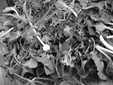
Photo: Łukasz Łuczaj
MZ: So they reached for what there was growing in their immediate surroundings?
ŁŁ: A great deal depends on cultural preferences. The inhabitants of the Amazon eat hardly any leaves, whereas the green parts of plants are present in the diets of hunter-gatherers in Southeast Asia. Some cultures eat mushrooms, others avoid them, even though they grow within easy reach.
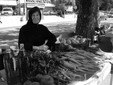
Photo: Łukasz Łuczaj
MZ: Is our relationship with wild edible plants connected to a memory of them expressed in the landscape? What does this trace look like from an ethnobotanical perspective?
ŁŁ: The landscape changed along with the climate. At one time, people fed acorns to pigs grazing in forests and also supplemented their own diets with acorns, so they favoured large oaks whose crowns did not touch, because such trees produced more acorns. Open woodlands emerged, with meadows and pastures within them. The people of that time would not understand the density of contemporary forests without the presence of grazing plants. The modern landscape we know from Poland and most European countries is a construct of nineteenth-century German forestry. It geodetically separated woodland from non-woodland and disciplined forest compartments.
Today, forests are subordinated to timber production. Common forests, owned collectively by communities, were harder to transform into plantations because they were used for gathering firewood and forest products and for grazing animals. In the nineteenth century, not only did people begin creating forest plantations, but these plantations also acquired specific owners; other members of the community were allowed at most to gather mushrooms and brushwood.
Before forests were turned into timber plantations, the forest landscape was co-created by edible trees − mainly oaks and beeches in northern and central Europe. In Georgia, on open wooded pastures, oaks, sweet chestnuts, apple trees, pear trees, plum trees, and persimmons still grow side by side. Around Corund, among the Székely people, beautiful wooded pastures contain three-hundred-year-old beeches whose nuts are pressed for oil.

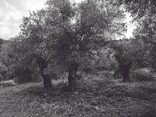
Photo: Łukasz Łuczaj
MZ: So it was a landscape in the spirit of permaculture − edible, multilayered, and a perennial ecosystem?
ŁŁ: Yes, and relics of it survive, for example the bocage landscape in France, divided by hedgerows. In western Normandy, parts of Brittany, and some departments of central France, grazing areas are still separated by hedges. Farmers baked bread using wood from these hedges, planted apple trees within the pastures, made cider from their fruit, and obtained milk for cheese from their animals. This multifunctional, durable, and biodiverse ecosystem is also beautiful. Old productive trees stood alongside open, sunlit spaces. In terms of the number of plant species per small area – a few dozen square metres or so − open wooded pastures are the richest habitats. The highest biodiversity has been recorded in Estonia.
In the past, grazing was also practised in many Polish forests. As long as it is not excessive, it enriches forest flora. In Poland, however, it was banned in the 1960s.

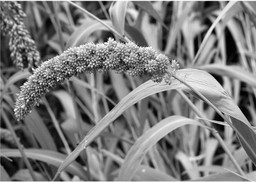
Photo: Andrea Moro / Wikimedia Commons CCA-SA 4.0 International
MZ: You have also conducted research in places where olive groves grow, sometimes of archaic origin. Have historical agricultural traditions survived in their management?
ŁŁ: Olive groves vary greatly. Only a few relic olive groves have survived, usually in mountainous, rocky areas, such as on the Croatian island of Pag. Intensive cultivation is difficult there. In Portugal, some olive trees are estimated to be more than two thousand years old. Standing among them, one has the impression of direct contact with antiquity, because it’s what those trees remember. Yes, olive trees planted in the Bronze Age are still growing in Europe. They survived ancient Greece, the Roman Empire, and the Middle Ages. On the Greek peninsula of Pelion, tens of thousands of ancient olive trees grow right by the sea, at the foot of a mountain slope with a cave. I entered the cave, and a swarm of bees and bats flew at me. I fled into those thousand-year-old olive trees and felt as though I were standing in the setting of a film adaptation of Greek mythology.
Olive oil is expensive nowadays, so many olive groves are cultivated intensively: young trees, twenty to forty years old, are planted densely and sprayed with herbicides. Such plantations differ very little from the apple orchards around Grójec.

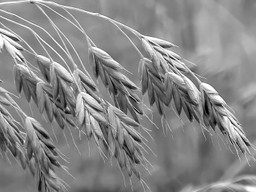
Photo: Kurt Stüber / Wikimedia Commons GNU Free Documentation License
MZ: What traces of former settlement have survived in our immediate surroundings, in Lesser Poland?
ŁŁ: The most important traces are the narrow strips and plots of land. When a village was established, a farmer received a dozen or so hectares − broad strips. Over time they became narrower. Even if farming has already been abandoned in a given area, traces of these strips remain visible: here a belt overgrown with goldenrod, there with birch trees… Long strips made ploughing easier because there was no need to turn the horse around. That is why fields were divided into ever narrower strips rather than across their length.
In many European countries, such as England, land consolidation took place because the increasingly narrow plots eventually lost any practical value; and also due to changes in the economic system. Consolidation occurred in parts of Poland as well, mainly in the lowlands, whereas in the south, in former Galicia, the strips survived.

Photo: Łukasz Łuczaj
MZ: Are there still traces in the landscape of the cultivation of old cereal species?
ŁŁ: Those have disappeared, and the process has accelerated in recent years. Even in the smallest villages in the most remote regions, farmers spray their fields with herbicides against broadleaf plants. In spring, nothing grows there. Poland is turning into a biodiversity desert. Some cereals that were once present in the Polish culinary landscape have vanished entirely. Around Tarnów, Italian millet (Setaria italica) was still cultivated in the first half of the twentieth century; today no trace of it remains. I was fortunate to meet people who remembered the taste of rye brome (Bromus secalinus). It grows among rye as a weed and also produces grain, though of lower quality than rye; it was harvested when rye crops failed. No one cultivates Digitaria, once known as Polish millet, any more. In the eighteenth century, Jan Krzysztof Kluk, the author of the first syntheses of Polish flora and fauna, wrote about it. Similar cereal species are still cultivated in Africa, for example in Ethiopia, going by the name fonio. Many lesser-known cereal species and varieties continue to be grown in warmer mountain uplands: besides Ethiopia, also in the Middle East − the homeland of cereal cultivation − in the Caucasus and Anatolia. In Poland, unfortunately, the landscape of cultivation, and indeed of plant-derived food in general, has become highly homogenised.
Among Polish cereals, manna grass (Glyceria fluitans) has fallen into the deepest oblivion, despite once being widely known. It grew wild in marshes. I conducted ethnobotanical research on its use. The tasks in our team were divided. Jarosław Dumanowski searched peasant tribute records, old cookbooks, and all kinds of historical sources for references to manna. In autumn, peasant families brought manna to their lord as a tribute, for example a quart of it. Aldona Mueller-Bieniek, an archaeobotanist, examined old vessels under a microscope to determine whether manna appeared in archaeobotanical materials − that is, plant remains found at archaeological sites. Piotr Köhler and I analysed the materials of Józef Rostafiński, a botanist and pioneer of Polish floristics associated with Kraków. I also prepared maps of nineteenth-century manna-gathering sites, which showed that it was a common activity: our ancestors collected manna on the Sandomierz Upland, in Greater Poland, Warmia, Podlasie, and Polesie, in Lesser Poland, and even near Kraków, despite the fact that its surroundings are poor in marshes. Manna was used to make bread, soup, and groats. It was very expensive because gathering it was laborious. People went out at dawn before the dew had evaporated. Sieves were placed beneath the plants and shaken; the wet seed heads fell intact. Thanks to the morning moisture, the grain did not spill out of the sieves, and once it had dried, it could easily be cleaned back in the village. The manna harvest took place at the end of June, between Saint John’s Day and the feast of Saints Peter and Paul. That is when the plant ripens, and its harvests are recorded in historical herbals. I still gather manna at that time of year.
It seems to me that the entire manna economy was driven by manor houses, because it was a highly valued and very tasty grain. The lords had free labour at their disposal, whereas it was not worthwhile for peasants to gather it for their own use. Manna does not appear in sources predating the Polish state; it began to be collected on a large scale only during the feudal era. Gathering ceased with the end of serfdom because there were no longer enough hands to do the work. Manna was traded and exported to other countries.
Through Professor Rimvydas Laužikas of Lithuania, I met the biochemist Rūta Lukenskienė, leader of a Facebook group devoted to Lithuanian wild cuisine. Her husband, the artist and professor Česlovas Lukenskas from the Vilnius Academy of Arts, creates totem-like sculptures in the landscape. I visited these wonderful people living in the middle of nowhere; there, I found gigantic totems and an art gallery. She comes from a family of bakers, from a Polish-speaking household, and speaks Polish. Until the 1970s, she gathered manna − which they called mańka − with her grandmother. The best bread was made from manna, though she never managed to collect enough for an entire loaf; it was used more as a seasoning added to ordinary grain. From what they gathered, a special bread was baked for the feast of Saint Anne on 26 July.
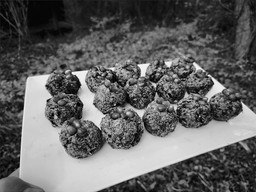
Photo: Łukasz Łuczaj
MZ: What is the current dynamic of growing edible plants for one’s own use? During my research in allotment gardens, I noticed that people who follow contemporary trends in recreation care deeply about their own edible plants − from herbs to fruit trees. Is this changing? Are new plants being cultivated today?
ŁŁ: The very reason allotment gardens exist is so that people can devote time to growing plants. They will survive. Even in cities, enthusiasts cultivate edible plants on balconies. In villages, home gardens are becoming increasingly rare; lawns and arborvitae have replaced them. Today it is difficult to buy vegetables from someone in the countryside. At most, potatoes, sometimes eggs, and that is about it. Of course, there are still enthusiasts who plant rare and interesting species and varieties.
New crops are reflected in the bouquets of cultivated plants and herbs blessed on the Feast of the Assumption (“Our Lady of Herbs”). More than a hundred years ago, Seweryn Udziela documented such bouquets around Kraków; peasants blessed peas, among other things. Today no one blesses peas. Nowadays people bless chokeberries and grapevines, which means these plants are important to them. In the Middle Ages, grapevines were cultivated by monks near monasteries, but chokeberries were absent. They are an import and have been present in Poland on a larger scale only since the second half of the 1970s.

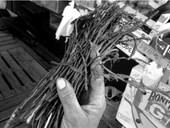
Photo: Łukasz Łuczaj
MZ: I wonder whether we would find juniper branches in Assumption bouquets in Kurpie… I was surprised by the results of your research on juniper beer.
ŁŁ: Psiwo kozicowe, as juniper beer is called in the Kurpie dialect, is associated with Kurpie, but the Polish Ethnographic Atlas records its presence in many regions of northern Poland, from Kashubia to Podlasie and Masovia. My paternal family comes from Podlasie, and once my father told me that his mother used to make this beer. Jarosław Dumanowski collected archival recipes for juniper beer and notes from old newspapers. One of them lamented that birds had eaten all the juniper berries somewhere and there would be nothing left to make beer from. The notes also listed addresses in Warsaw where such beer could be bought. It is not really beer, rather an alcoholic beverage made from juniper. Juniper berries were crushed, yeast, honey, and hop cones were added, and the mixture was left in a vat for several days to ferment. It was a ritual drink, served mainly at weddings and funerals.
I co-authored an article about it for the Journal of Ethnobiology.[1] The reviewer was the chemist Patrick McGovern, who studies ancient beverages through residues found in vessels. In Georgia he discovered the world’s oldest wine, and in China the oldest alcoholic beverage of all, more than nine thousand years old. It was made from grapes, honey, and hawthorn. In the conclusion of our article, I described juniper beer as a degenerate form of beer. McGovern disagreed with my thesis because he had found the same type of beer in Denmark, in vessels three and a half thousand years old. It is possible that a recipe circulating around the Baltic reached the women of Kurpie. Sometimes individual people still use archaic recipes. A few years ago, I read an article about a woman who baked acorn biscuits with clay. References to this dish appear in materials from ancient Greece. The woman lived in Sardinia and was apparently the last person there still using that recipe.

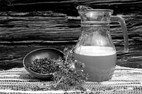
Photo: Bogdan Kurpik, Wikimedia Commons, CC BY-SA 4.0
MZ: In the winter of 2024, during an ethnobotanical seminar at the botanical garden in Warsaw, you mentioned a growing interest in wild-cuisine workshops, as well as in wild edible plants and knowledge about how to prepare them. Does this seem like a temporary fad or more of a lasting trend?
ŁŁ: A lasting trend, and it will certainly continue to evolve for various reasons. It first surfaced during the peak of the economic crisis in the 1980s. Back then, television programmes taught people how to preserve fruit. In the postwar years, people made fizzy lemonade, sometimes even alcoholic, from cornflower petals. Later it fell into oblivion, while rose preserves became popular. For a time, Poles were enthusiastic about dandelion honey; now wild garlic is fashionable, a trend initiated by Robert Makłowicz.
At one point, the television programme TVN Uwaga wanted to interview me as someone who promoted edible insects. I kept refusing because I was tired of my reputation as an insect eater. Eventually I agreed, but only on condition that they include footage of me cooking ground ivy soup with potatoes. They decided that was not sexy and that nobody would be interested in wild edible plants. That was 2008. They were mistaken. Within two or three years, it became very sexy.
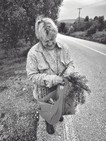
Photo: Łukasz Łuczaj
MZ: Are there places where wild edible plants that have found their way into culinary practice are traded? Do they appear in marketplaces?
ŁŁ: Show me your marketplace and I will tell you what kind of culinary culture you have. A marketplace immediately reveals what the local diet consists of and whether it is poor or diverse. I discovered extraordinary botanical richness in Laos. In the market in Luang Prabang alone, I identified more than one hundred species of wild vegetables! In addition, there were more than fifty species of mushrooms at a single market! Similarly, at a market in a valley in China’s Shaanxi Province, my research team and I recorded more than a hundred species of wild vegetables.[2] Some were more popular than others; some were purchased by only a handful of people, while others were known to the entire community.
Very little is known about the assortment of most markets around the world; relatively few studies have been conducted on them. Moreover, markets are changing. Modernity leaves its mark on them. Many disappear entirely because they are displaced from their locations, outlawed, and replaced by shopping centres and supermarkets. We know the history of Polish markets relatively well. In the 1920s, the Poznań ethnographer Jerzy Wojciech Szulczewski recorded every species of mushroom and plant sold at the market in Poznań. He counted more than sixty mushroom species! Today there not even half as many. Ten years ago, Joanna Sucholas repeated the study.[3] Medicinal plants are now very rarely sold, partly because of sanitary regulations. Also in the 1920s, the pharmacist Jan Kazimierz Muszyński studied the markets of Vilnius; at that time, vendors offered dozens of species of medicinal herbs.
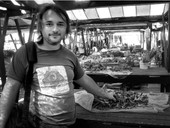
Photo from the archive of Łukasz Łuczaj
Having said that, the assortment of markets is not necessarily becoming poorer; I would rather say that it is changing. Twenty years ago, there were no blackthorn berries, quince, or hawthorn at the market in Rzeszów. They appeared because homemade liqueurs became fashionable again. Wild garlic was absent too, and now it is ubiquitous. Renata Kasper-Pakosz, then my doctoral student, documented all the plants sold at markets in Rzeszów, Leżajsk, Przemyśl and Przeworsk.[4] Every plant and every vendor. Every two weeks for two years she took photographs, creating an archive of several thousand images − Rzeszów now has the most thoroughly studied marketplace in Europe. She counted more than four hundred plant species. More than that, she discovered two mushroom species at the Rzeszów market that until recently had not been recorded in Poland’s mycobiota! Similar research was carried out by our Armenian-Polish team in Yerevan.
Recently I found a 1950 study on flowers sold in Kraków markets. Even lady’s slipper orchids were sold there! I also came across information that songbirds were sold as food in Kraków’s Main Market Square during the first half of the twentieth century. Such information will not survive unless it is recorded.
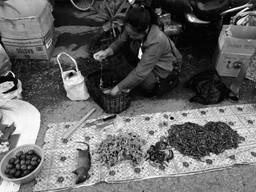
Photo: Łukasz Łuczaj


