


In 2019, the philosopher and environmental historian Sébastien Marot presented the exhibition and book Taking the Country’s Side: Agriculture and Architecture at the Lisbon Architecture Triennale. They comprised a monumental attempt to reunite architecture with agriculture and to rethink their shared history. He diagnosed both as being in a profound crisis: since the Neolithic Revolution, architecture and agriculture − the two pillars of our civilisation − had advanced side by side, jointly shaping the face of the planet. Today, however, both these foundation pillars, anchored in a destructive model of extraction and exploitation, have brought us to an ecological impasse.
We are trapped in the jaws of a paradox: further urbanisation of the world seems inevitable, yet at the same time, amid the climate catastrophe, it is impossible to sustain in its current form. Marot argues that we will not salvage the future without a radical return to the land and the abandonment of the logic of the “mine” in favour of the logic of the “garden”, based on regeneration and care.
He concludes his reflection with four scenarios for humanity’s future pathways in the era known as the Anthropocene: incorporation, negotiation, infiltration, and secession. They are not mutually exclusive; they can be seen as maps on which we observe different versions of possible worlds − from a technological retreat into the depths of the metropolis, through attempts at diplomatic coexistence and grassroots occupation of urban cracks, to a radical exit from the system in search of a new autonomy. They compel us to ask ourselves and think: which direction do we wish to take to preserve the idea of community and our bond with the planet?
Incorporation – the highly capitalist metropolis absorbs agriculture
In this scenario, industrial agriculture, subordinated to capital, is absorbed by the metropolis. Incorporation responds to the problems created by the industrial model of production with an even greater scale of the same model: greater concentration of ownership, automation, and control. Incorporated within it is the assumption that contemporary agriculture will be led away from its dead end by further technological advances: soilless cultivation, closed-loop systems, vertical farms, and ultra-efficient production systems.
Before that happens, however, the dense urban core will manage the rural landscape in a 2.0 version: a network of robotised latifundia, intersected by belts of production forests, mines, nature reserves, and recreational zones. Teams of experts will sit in the control tower. This ethos of concentration is captured well by Stewart Brand in Whole Earth Discipline (…). His argument can be summarised as follows: it is better to concentrate everything that is harmful than to disperse the effects of industrial metabolism across the entire planet. Dense cities, controlled nuclear waste storage, and ultra-efficient agriculture promise to reduce pressure on other territories and leave more space for wildlife.
Many architects seem inclined toward an escape into hypertechnology, a “spaceship ecology” (a term coined by Peder Anker). They dream of enclosing calorie-production cycles within hermetic systems: towers, spheres, and pyramids. In this scenario, “incorporation” has a double meaning: it refers to both the absorption of cultivation into urban engineering and its complete subordination to the economic model of hypercapitalism.

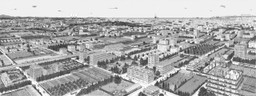
Negotiation – agriculture as an integral part of suburban areas
At the foundation of this vision lies a concept that could be called agricultural urbanism. It should be distinguished from urban agriculture. It challenges the traditional division into urban zones, agricultural zones, and natural areas. It harnesses the potential of cultivation to create welcoming shared spaces and to reshape the forms and functioning of the metropolis.
Orchard parks, vegetable housing estates, water-garden neighbourhoods, open agronomic campuses, agro-districts… many forms may emerge from this alliance. At the same time, reversing the harmful dynamic of the divorce between city and countryside would blur the boundary between work and leisure.
Although this vision is still in its infancy today, it has strong foundations in contemporary agroecology and draws upon the traditions of premodern urbanism. Were not Olmsted’s park systems, Howard’s Garden Cities, and Wright’s Broadacre City the first sketches of an agropolitan future? Perhaps the time has come to return to those ideas and negotiate new agreements between rural and urban practices: contracts capable of healing and strengthening the shapelessly sprawling city.
It is no surprise that contemporary landscape and ecological urbanism readily embrace this narrative. They promote the idea of the “horizontal metropolis”: instead of separating itself from nature, this type of human settlement seeks to incorporate it and cultivate it within its own fabric. And yet they fail to answer the crucial question: will this vision truly lead to more diverse forms of coexistence, or will it degenerate into a green screen for unchecked real-estate development?

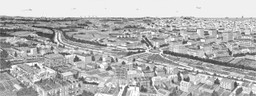
Infiltration – agriculture and gardening penetrate the city
This grassroots, pragmatic approach is known as urban agriculture. It makes use of abandoned and surplus spaces − rooftops, vacant buildings, wastelands − to reintroduce cultivation into the urban landscape. At the same time, drawing on the tradition of market gardening, it organises itself into local networks (for example, CSA − community supported agriculture) in order to bypass or “short-circuit” markets and the mechanisms of large-scale distribution. These initiatives do not directly challenge the logic and realities of the urban condition; indeed, they make use of its niches, densities, and diversities. They seize upon food production, supply, and consumption (and their local reintegration through short supply chains) as a means of initiating collectives and practices of solidarity within the uprooted territories of the metropolis.
Whether they integrate directly into the urban fabric or subscribe to products from the rural hinterland, all of these approaches, to a greater or lesser extent, stimulate neighbourhood proximity within agglomerations perceived as a constellation − or a foam − of commons. Although nothing prevents municipal authorities from encouraging or emulating it, infiltration is fundamentally a bottom-up, pragmatic process driven by an ad hoc logic of self-organisation. It appears here and there, like weeds, in the cracks and fissures of urban territories. In times of economic crisis, however, it can assume the dimensions of a veritable swarm, with individual and cooperative food-growing initiatives occupying a significant percentage of urban plots. Such a scenario unfolded in Havana (and Cuba in general) during the “Special Period”, and in the city of Detroit following the collapse of the automotive industry.
If economic and energy crises strike an increasing number of large urban agglomerations with force and multiply the forms of urban fallow land within them, infiltration in this form − as the unplanned or uncoordinated agricultural reclamation of urban ecosystems and their suburban fringes − will likely move beyond mere acupuncture. It will spread across broad metropolitan territories and eventually recreate within them the patterns, margins, and fabrics of rurbanisation (the interpenetration of urban and rural characteristics). The question remains how these will compose themselves with the palimpsest of species, forms, and remnants of the metropolis, and with their instinct for survival.

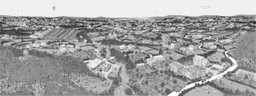
Secession – “Let’s build a settlement”
This is the most radical approach, agrarian in character. Its proponents challenge the dominance of the city and its politics and, consequently, the monopoly of urbanism over the creation of resilient and sustainable living conditions. They draw on the conclusions of the Limits to Growth report (1972) and countless subsequent, overwhelming analyses. All of them relentlessly point to the consequences of consumer society and the concentration of capital, while metropolises and their tourist satellites are simultaneously the source, framework and product of these phenomena. Only one conclusion suggests itself: metropolitan areas are unsustainable and, in the near future, they are doomed to decline. It is therefore necessary, to the greatest extent possible, to free oneself from their influence and prepare for their gradual marginalisation and dismantling, and even to work towards that decline.
In this scenario, urbanism is displaced by principles of coexistence and design techniques that protect the life-giving landscape and a complex, resilient, self-sufficient community of people, plants, and animals. The overriding goal is to achieve the greatest possible degree of local autonomy, based on an economy that draws upon the unique characteristics of a given place. It seeks to transform the entire territory into a confederation of worlds or self-governing municipalities. Alongside agrarianism and libertarian municipalism, permaculture is one of the most complete expressions of this programme today.
Many will probably consider it excessive to describe these foundational or refoundational, nonurban experiences worldwide as an exodus. Not all of them view themselves as antitheses to, or places beyond, the territories of the contemporary metropolis; sometimes they regard themselves simply as deviations, or “temporary” havens. Most must accept a certain compromise, and all, under all circumstances, must adopt a modus vivendi with the full package of rules and governance mechanisms of metropolitan territories. Finally, society at large will accept them as “enclaves”, and may even appropriate and promote them as prodigal sons of the metropolitan condition, ever inclined to absorb contradictions in order to boast of its own ecumenism.
Foundation: permaculture and David Holmgren
At the core of all Marot’s reflections lies a deep inspiration from permaculture, particularly the work of its co-founder David Holmgren. Marot considers permaculture to be more than a cultivation method, seeing it instead as a complete design system that integrates architecture and agriculture while accounting for the finite resources of our planet.
Together with his partner Su Dennett, Holmgren demonstrated in their Australian settlement Melliodora that it is possible to create an integrated living environment in which social needs go hand in hand with the carrying capacity of the ecosystem.
From this model, Marot derives the idea of the “three principles of post-industrial technology”: integration (maximising the use of energy), flexibility (the ability for systems to be repaired and adapted by their users), and cooperation (each element fulfils multiple functions). Permaculture offers the hope that the transition to a world without economic growth will not be a catastrophe, but rather a process of conscious and creative construction of new autonomy.
Marot’s primary point of reference is Holmgren’s book Future Scenarios: How Communities Can Adapt to Peak Oil and Climate Change. In it, the author proposed four possible paths for the evolution of our civilisation, depending on the pace of climate change and the depletion of energy resources.
He outlined visions ranging from “brown renewal” (attempts to save the system with coal and authoritarianism), through “green technology” (a transition to renewable energy while preserving urban structures), to more radical forms: “managed collapse” and “agricultural rescue”.
It is this intellectual framework − treating the future not as a single inevitable fate, but as a range of possibilities forced by the planet’s biophysical reality − that Marot based his four scenarios upon. He creatively transplanted this method into the field of urbanism and architecture in order to consider how our cities and fields will respond − voluntarily or under compulsion − to an approaching turning point. Based on Sébastien Marot’s book Prendre la clef des champs. Agriculture et architecture (Taking the Country’s Side. Agriculture and Architecture). We thank Ola Wasilkowska for recommending the book.


