


I have always been interested in many things at once. In a world of narrow specialisations and niches imposed by visibility algorithms, combining multiple fields of knowledge can be a challenge. Yet some of us have minds that work precisely like this, in 5D: simultaneously processing images, functions, connections to other phenomena, evolution through time, and an imagined outcome, with the maximum possible number of variables. Essentially, we are trying to grasp how the universe works: as a network of processes, flows of energy, and relationships unfolding through time.
The universe tends towards thermodynamic equilibrium. Behind this emotionless piece of information lies maximum entropy. All matter and energy become evenly dispersed − in this state, all energy gradients are levelled out; under such conditions, nothing further can happen. This is why life exists only as a persistent imbalance: a constant flow of energy. An organism takes it in, for example in the form of food, transforms it, and releases it again, simply in order not to “stop”. According to the theory of the Big Freeze, the universe still has approximately ten to the power of one hundred Earth years left before reaching this state, known as heat death − an astoundingly vast amount of time.
Our global economic and food system operates according to a much shorter calendar. To the ecological economist Nate Hagens, it resembles a greedy, centralised and mindless “superorganism” that draws fuel for continuous growth from its own tissues and from its surroundings. It operates in a reinforcing loop similar to addiction: every gain requires an ever larger portion of resources, and growth consumes the foundations of its own existence. The matter and energy used by the superorganism, such as oil, do not disappear; they pass from a concentrated and ordered form (low entropy) into a dispersed form (high entropy), such as pollution and waste heat. This process cannot be reversed without the input of enormous amounts of additional energy, which is why one often hears that recycling, although absolutely necessary, is a net energy loss. What appears to be development or growth in economic terms is called an increase in entropy in physics, and in biophysics it is the definition of slow death.
If we are to continue evolving within the time granted to us by the universe, we must begin to think of our civilisation as a holobiont. The term comes from biology and refers to a host organism together with its entire microbiome − that is, its microorganisms. They all live in symbiosis, like humans with their gut bacteria or coral reefs with the algae and bacteria living in their tissues. Borrowed to describe civilisation, it signifies a symbiotic and dynamic network of cooperation within the biosphere, including ourselves. The health of this collection of elements depends on each of them, and it is based on homeostasis: a system’s ability to self-regulate and maintain stable conditions despite changes in its environment. Growth, where it occurs, is calibrated to the actual capacities of the surrounding environment.
What is the situation now? In today’s world, almost all capital for innovation is flowing into the pool of AI solutions. Not always consciously and often without our consent, we have been enlisted in a capitalism-distorted, fossil-fuel-powered race to monetise every action and tokenise every resource. Turned into a product, ideally filled with microplastics and dressed in plastic, we dream petrochemical dreams of a “sustainable future”. In exchange for simulacra of community, we give our valuable time and costly neural attention to Meta (Instagram and Facebook) and ByteDance (TikTok). This is why I work with food and write about it for you, because food has been and always will be the foundation that builds us. We exist because of it. The beautiful Polish word żywność (“food”) derives from the Proto-Slavic životъ (life, existence) and živьnъ (nourishing, sustaining, but also true and sincere). If AI or the internet were suddenly to disappear, we would survive. Shortages of fossil fuels would cause an enormous crisis (in fact, the beginnings of that crisis are already taking shape in connection with the United States’ and Israel’s attack on Iran). Perhaps we would regress economically by a hundred or a hundred and fifty years and somehow figure out what comes next. Without food, we would survive for thirty, maybe forty days. Food determines our to be or not to be, and at the same time it is a system so complex that it contains within itself the entire history of our species.
In A Treatise on Shelling Beans, Wiesław Myśliwski used this simple act as a pretext for summing up an entire life. Let us follow in the footsteps of the great writer and summarise human life from the perspective of that which built us and continues to build us − food. We will go back to the beginnings of nourishment and examine how it built our civilisation, all the way to the unstable moment in which we find ourselves today. Enriched by this knowledge, we will try to view different scenarios for the future as a double-edged sword: what they can give us and what they demand in return. Three key concepts will accompany us along the way: the superorganism − the global system of today, in which the food system is also entangled; the holobiont − as a direction toward which we might one day evolve; and conscious feedback − as a way of designing change deliberately rather than blindly, by trial and error.
What is food? A brief history of a long leap
Our brain is an extraordinarily energy-expensive organ: with a volume of 1,350–1,400 cubic centimetres, representing only about 2 percent of body mass, it consumes as much as 20–25 percent of resting energy expenditure − the energy used solely to maintain basic life functions. Its evolution to its current complexity would not have occurred without radical changes in the diet of early humans. The large, slow digestive system of fully herbivorous primates digests low-calorie leaves, but ends up with less energy available for the development of the cerebral cortex. Humans went in the opposite direction. Some 2.5–3 million years ago, they enriched their diet with meat. The concentrated proteins and fats contained therein made it possible to reduce the energy-expensive digestive system. Then our ancestors learned to use fire. Thermal processing releases glucose from cooked starch, thus providing fuel for the nervous system. Fish and seafood added DHA (docosahexaenoic acid), essential for brain growth. What we ate literally shaped our species.
Phylogenetic modelling (the branch of biology that studies the evolutionary pathways of species) shows that if we had neither broadened our diet nor learned thermal processing, evolving to our present state would have required us to spend nearly 48 percent of our waking hours chewing raw, low-calorie food − about nine to eleven hours a day. Through processing (chopping, cooking, fermentation), we reduced this time to 5 percent, roughly one hour. What did humanity do with the time thus gained? We invested it in science and art, but also in hierarchy and war. And we picked a fight with the climate.
The climate was always changing. Today humanity suffers from warming; once it struggled with cooling. The latest research pushes the beginnings of agriculture back by nearly a thousand years compared to previous estimates, to the period of sudden cooling known as the Younger Dryas (around 12,900 years ago). The hunter-gatherers of Abu Hureyra on the Euphrates fed mainly on wild rye; in response to its sudden decline in the surrounding environment, they learned to cultivate the plant. The first forms of agriculture increased food security and encouraged a sedentary way of life. When the climate stabilised in the early Holocene (around 11,700 years ago), it laid the foundations for the classic Neolithic agricultural model: grain cultivation and animal husbandry.
Stable harvests meant something we had already gained once with fire: a caloric surplus and reclaimed time. Instead of covering kilometers while hunting, it sufficed to work a field. The hours and energy previously spent obtaining food freed up space for specialised professions, new hierarchies and the first states.
The next major energy surplus leap came in the nineteenth century. This was when humans invented engines that converted coal into mechanical work, which until then had been done using the muscles of people and animals powered by food. Productivity grew rapidly, and economies swelled along with it to such an extent that the era earned the name of the Industrial Revolution. In the 1920s, people and animals in agriculture were replaced by oil-powered combustion engines, and food became permanently associated with fossil fuels.
After the First World War, fossil fuels penetrated even deeper into food through chemistry. In the Haber–Bosch process, hydrogen from natural gas combines with nitrogen from the air to produce ammonia, the basis of synthetic fertilisers. The creator of this method, the German chemist Fritz Haber (who patented it in 1908, receiving a Nobel Prize in 1918), was also known as the father of chemical warfare: he invented Zyklon B, supervised German gas attacks during the First World War, and Zyklon A liquid insecticide was developed at his institute. Haber did not live to see the unlawful use of Zyklon B in gas chambers; the members of his own family who were suffocated with it were less fortunate. After the Second World War, the same infrastructure that had produced explosives was redirected to fertiliser production. Civilisation permanently connected food to natural gas: most of the grain we eat today was grown using chemicals powered by coal and oil.
In 1900, in a world at the threshold of the synthetic fertiliser era, the Earth was home to about 1.6 billion people, and agriculture fed the overwhelming majority of them. By 2000, as much as 40 percent of the global population owed its survival exclusively to agriculture powered by synthetic nitrogen; by 2019, the figure was nearly 50 percent. Today, the Haber–Bosch process delivers more than 40 percent of the protein in our meat-based diet, and almost half of the nitrogen in our bodies originates indirectly from this technology. And yet, we retain only 0.3 percent of it for ourselves, in the form of proteins (anthropomass); the rest we excrete every day, most of it into the sewage system. We have broken the natural nitrogen cycle: natural gas is turned into fertiliser, the fertiliser goes onto fields, from fields onto our plates, and then flows with wastewater into rivers and seas − instead of returning to the soil.
What would happen if we suddenly abandoned the use of fertilisers? Estimates from 2000 showed that sustaining the world’s population at that time (6 billion people) would have required almost quadrupling the area under cultivation − we would have had to devote more than half of all ice-free continents to farmland.[1] With today’s population of 8.3 billion, we would be approaching nearly 70 percent of all ice-free land under the plough. And what if we had never used fertilisers on a mass scale? The world would now be home to around 3 billion Homo sapiens,and only if the overwhelming majority of us had switched to a vegetarian diet. With today’s proportion of meat in the diet, only about 2.4 billion people could be fed. Meat is extremely nitrogen-inefficient − it takes seven kilograms of nitrogen in feed to produce one kilogram of animal protein. Given the same pool of resources, a diet based primarily on plants can sustain far more people than a meat-based diet. We should not, however, fall into any kind of dietary extremism. At the opposite extreme of the meat-based diet lies the raw vegan diet, a radically plant-based regime that in our climate is possible only thanks to global supply chains delivering avocados, bananas, seeds, nuts, and oils from warm regions. Without them, a winter diet in Poland consisting exclusively of raw plants would quickly lead its adherents to lose muscle mass; in women, the menstrual cycle would cease. In practice, then, the farther we move away from a local, seasonal and balanced plant-based diet − toward industrial meat and tropical agriculture powered by synthetic fertilisers − the more our survival depends on fragile global supply chains, fossil fuels, and above all synthetic nitrogen. Every one of these scenarios leads to the same conclusion: without the Haber–Bosch process, neither you nor I would probably have been born.
The numbers are relentless: for every calorie of food produced in the field, we use about two calories from fossil fuels, and then we continue to burn another eight to twelve calories on processing, packaging, transportation and storage. In nature, an organism that spends more energy obtaining food than it gains from it does not survive for long. Our species has not yet gone extinct because we draw upon exhaustible fossil fuels as though they were income, even though in fact they are diminishing capital. Humanity consciously chose each of its leaps: meat, fire, agriculture, fossil fuels, the Haber–Bosch method. What we did not realise were their cascading consequences; there was no way we could have known. Today, however, the available data and tools allow us to look at every food-related decision in five dimensions at once: what something is today, how it works, what it is globally connected to (human health, soil, climate), how it evolved, and what future scenarios it sets in motion.
A food product as a new, faulty signal for our evolution
Shop shelves offer a large but illusory choice. In an average shop, we may find one to three varieties of apples, two kinds of cucumbers, but seven varieties of Milka chocolate, a dozen instant soups, and several dozen energy drinks. Beneath this apparent abundance lies the era of non-nutritive, ultra-processed food (UPF). Artificially driven capitalist market diversification has eroded true food biodiversity.
The European Food Safety Authority, and with it Polish law, defines food perhaps in a more egalitarian way than any other of its subjects and objects: as “any substances or products, whether processed, partially processed or unprocessed, intended to be consumed by humans”.[2] The concept is astonishingly broad; it includes chewing gum (a synthetic polymer), alcohol, and all technological additives. Only pharmaceuticals, stimulants, cosmetics and animal feed are excluded. As a result, store shelves are dominated by long-lasting substances that are formally “food” but in practice are closer to industrial chemistry. Separate sections labelled “Healthy Food” prompt one to wonder what fills the rest of the shop. Current law requires “product safety” (the exclusion of the risk of immediate poisoning) but ignores “metabolic safety”, that is, the long-term health effects of our daily diet.
The current state of affairs did not fall from the sky; it is the result of a specific history. After the Second World War, the same nitrogen that had fed explosives on the battlefield was harnessed to feed fields of farmland. In the 1940s and 1950s, the Rockefeller Foundation and the Mexican government launched the Mexican Agricultural Program. Within that framework, Norman Borlaug (Nobel Prize 1970) bred a high-yield, disease-resistant “semi-dwarf” wheat. By 1956, Mexico had achieved wheat self-sufficiency, then the technology spread to Asia, and gave rise to the so-called Green Revolution − an unusual revolution in that it calmed social unrest and helped combat hunger. Yet it exacted a double price for its contributions. Millions of local varieties literally had to give way to a handful of global monocultures, and the new crops could not survive without an obligatory package: synthetic fertiliser, pesticides and irrigation. Cultivation was oriented toward biomass rather than nutritional value. Rising levels of carbon dioxide in the atmosphere stripped even more nutritious protein and minerals from wheat while increasing the amount of calorie-rich starch. Intensive fertilisation partially reverses this process − and increases protein content; unfortunately, that includes allergenic proteins such as gluten and gliadin. This is why more and more people feel worse after consuming products containing wheat.
The UPF era began in the 1970s, when the oil crisis and American overproduction of corn flooded the market with cheap high-fructose corn syrup. In the 1990s, the offensive of first-generation GMOs enabled monocultures to survive aggressive doses of petroleum-derived herbicides; as a result of this victory, our food chain remains saturated with them to this day. By 2026, the system had closed itself into a triad: the same corporations control energy, seeds, food chemistry and pharmaceuticals, and by appropriate means they keep human metabolism in a state of profitable dysfunction, where symptoms rather than causes are treated. In 2018, Bayer AG merged pharmaceuticals, seeds and pesticides by acquiring Monsanto, the creator of glyphosate.
Food − the fuel of metabolism − is a carrier of molecular information. Every product has an individual biochemical signature. It goes beyond calorie balance and modulates gene expression, determining which fragments of our DNA are actively read and which remain silent. When the “input data” is of low quality, errors appear in the body’s “software”. Not every UPF is bad. Salt iodisation (which prevents hypothyroidism), pasteurisation and vitamin fortification have saved millions of lives. The problem begins when ultra-processing is designed not for homeostasis (the body’s ability to maintain balance) but rather for marketable palatability. Engineers of modern food aim for the bliss point − the ideal ratio of sugar, salt and fat. This golden combination floods the brain with dopamine, much like cocaine, which is why we cannot stop eating a chocolate bar or a packet of crisps.
The manipulation reaches much deeper than the realm of taste. For most of our evolution, fructose was rare; it came from fruit and signalled the end of the season of abundance. The body would then switch on a reminder: “store fat, conserve energy, winter is coming”. Today, chocolate bars containing high-fructose corn syrup trigger the same survival mode. Your body thinks cold and hungry days are approaching, so it slows down metabolism and stores fat in the liver. You reach for another serving of sweets. A lack of willpower is not always to blame; technology has deceived your biology. This is why insulin resistance and obesity, which we call diseases of civilisation, in the paradigm of evolutionary biology are more accurately described as adaptations to an error. Cells, which are flooded daily with a signal of excess, “close the door” (become insulin resistant) so as not to be scorched by the sheer quantity of free radicals. Metabolic syndrome has nothing to do with malfunction; quite the opposite − the organism has demonstrated that it can cope within the environment of a toxic food system. We pay for this evolutionary success with chronic inflammation, brain fog and fatigue. Instead of changing the environment to make it safe, we have biologically adapted ourselves to the unsafe one. We will not be cured by another generation of drugs, because we suffer not due to a pathology of the organism, but as a result of a feedback loop between biology and the system that surrounds it. The entire system would have to be redesigned − from farmland, through legislation, all the way to the bliss point.
The new economics of food: three vectors of the holobiont
Having learned from the experiences of our ancestors, we now know that every proposal for a new food system must be examined thoroughly, because by supporting one solution, we may intensify a problem elsewhere in the long term. In our thinking we must consider the scale of the whole system and view its elements as communicating vessels. Designing a new world, however, must begin with a technical observation that acts as a filter for ideas: complete circularity − a one-hundred-percent circular economy − is incompatible with the second law of thermodynamics. Our universe does not permit the existence of a perpetuum mobile. In a closed system, entropy always increases − every time we try to recover something, part of the material disperses, and we must inject energy from outside for the operation to be possible at all. Therefore, every closed system will sooner or later demand simplification: shorter supply chains, local and seasonal diets, fewer highly processed components, fewer types of packaging, or abandoning packaging altogether. Without this filter, circularity, sustainability and regeneration will end up as yet another wasteful lifestyle rather than a long-term solution. The ideal would be a holobiont: a living network in which biology, technology and institutions work together symbiotically and regulate one another.

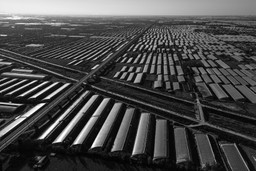
Photo: Kadir van Lohuizen / NOOR, Food for thought 2021-2023
Idea 1: A return to traditional agriculture
The security vector. Since the complete abandonment of synthetic fertilisers is not yet feasible without equally productive substitutes, let us focus on maintaining a parallel, independent production line (traditional varieties, soil regeneration, seed sovereignty). This would protect us from the monopolisation of what grows in the soil and preserve the biological diversity of our food. Meanwhile, we can continue developing alternatives to synthetic fertilisers and fossil-fuel energy.
Seed sovereignty and a return to old, non-modified varieties would allow us to maintain distance from the corporate seed monopoly, synthetic fertilisers and GMOs (in fact, Poland is currently a country free of GMO cultivation). Traditional seeds cannot be patented or locked into a chemical subscription model. Old local plant varieties generally cope better with local weather anomalies and do not require constant rescue through synthetic inputs. However, for such a system not to force a significant portion of society back into agricultural labour, not to entail the risk of mass deforestation for new cropland, and not to deprive us of cheap mass-produced food, lower yields per hectare must be compensated for. We must regard traditional varieties as strategic diversification rather than complete replacement. By using them, we would create a dual-track system: high-yield agriculture maintains a cheap caloric base and protects forests from clearing, while traditional cultivation serves as a health-promoting buffer and democratises access to sovereign food. If we add microbiological engineering (mycorrhizae, nitrogen-fixing bacteria, and fertilisers from industrial composting facilities), traditional varieties can significantly increase their productivity and safeguard us during the inevitable decarbonisation of agriculture, driven by the depletion of rich fuel deposits and conflicts over them.
Is anyone already moving in this direction? The international peasant movement La Via Campesina brings together agricultural organisations from eighty-one countries to defend seed sovereignty against corporate patents. Through the Navdanya Foundation, the Indian philosopher and ecofeminist Vandana Shiva maintains a bank of more than 4,000 traditional grain varieties and a network of farms independent of seed corporations. Regenerative farmers such as the American Gabe Brown and the Australian Charles Massy once operated farms based on chemistry and industrial methods, but droughts and financial crises forced them to trust natural biological processes. On his farm in North Dakota, Brown documented an increase in soil organic matter from 2 to 7 percent over twenty years; his five principles of soil health have been adopted by thousands of farms in the United States. Massy demonstrates that restored soil and the reestablishment of natural hydrological cycles support efforts to combat climate change.

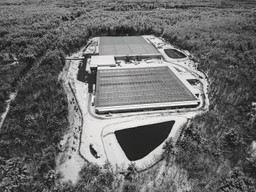
Photo: Kadir van Lohuizen / NOOR, Food for thought 2021-2023
Idea 2: Integrated agro-architecture
The proximity vector. Instead of globalising food flows, let us integrate production with the place of consumption. Supply chains would shorten, part of the refrigeration and storage infrastructure would disappear, waste would decrease, and freed agricultural land would gain a chance to return to biodiversity. Precision agriculture makes it possible to calibrate supply to demand based on urban planning and visions of city development.
The concept assumes transforming buildings and urban spaces into a network of cultivation. Instead of isolating the city from agriculture, we integrate food production into architecture: vertical farms on façades, green roofs, community gardens in parks. New building guidelines will be required. Powered by renewable energy, the system operates in a closed loop: water and fertilisers are obtained from safely filtered wastewater and urban composting facilities, with the participation of natural bacteria and fungi. Innovative materials also enter the picture − glass coated with a substance that, under sunlight, breaks down smog into nitrates, which serve as fertiliser for crops. The building no longer stands passively; it becomes an active environmental filter and a source of food.
The urban chemical cycle is closed. From what was once a problem (wastewater, smog), we obtain a resource (water, fertiliser). Food grows where it is consumed, eliminating refrigerated transport over hundreds of kilometres. Plants on façades and roofs act as natural insulation, easing the burden on the energy grid. The drawbacks? Pumping water to high floors and maintaining wet, heavy soil require structural reinforcement and constant energy consumption by pumps. The entire system depends on uninterrupted electricity supply and flawless filtration; a power failure or filtration error can destroy a crop or contaminate food within hours. To avoid disaster, continuous monitoring and multiple safeguards are required.
Agro-architecture transforms the city from a parasite extracting resources into a self-sufficient organism. It can function in two ways: through the adaptation of existing structures (post-industrial halls, abandoned commercial buildings, infrastructural rooftops) and through the gradual evolution of spatial planning law − if development plans require prefabricated “green modules” in new investments. The city would evolve into a distributed agricultural cooperative in which every new building must produce a specified quantity of calories in order to obtain construction and occupancy permits.
Is anyone moving in this direction? The Dutch firm van Bergen Kolpa Architects designs public buildings that produce food: the prototype Agrotopia in Roeselare and Vertical Farm Hengshui combine architecture with agricultural infrastructure. In his book The Vertical Farm, ecologist and microbiologist Dickson Despommier showed that indoor cultivation uses 70 to 95 percent less water than conventional agriculture and eliminates fertiliser runoff into surface waters, at the cost of a constant demand for energy. My company and brand called mood.farm introduces vertical farms producing functional food into office buildings. We have made them part of sensory and health-promoting infrastructure in the workplace.
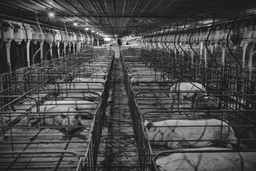
Photo: Kadir van Lohuizen / NOOR, Food for thought 2021-2023
Idea 3: A fifty-year transition and the redefinition of food
The simplification and democratisation vector. We shorten the trophic chain (plants → feed → animals → us) and supplement protein through precision fermentation and open-source technologies, because these prevent corporations from monopolising food at the patent level. Freed land can rewild at last, and sequester carbon dioxide. We return it to its original ecological owners: ecosystems, soil and pollinators. The entire system is conceived as adaptive; it responds to its own errors and has nothing in common with a top-down plan imposed blindly. It assumes a transformation of food production spread over half a century and based on three pillars.
Pillar one: The legal redefinition of food. Products harmful to human health, harmful GMO varieties, and unhealthy UPFs are reclassified as “metabolic stimulants” and subjected to high taxation, with the intention of phasing them out of the market.
Pillar two: The liberation of agricultural land and rewilding. We drastically reduce industrial animal farming. Meat and dairy products currently provide 18 percent of global calories and 37 percent of protein, while occupying as much as 83 percent of the world’s agricultural land.[3] We shorten the trophic chain, the path of energy from the sun through plants to our stomachs. Instead of growing soy and corn to feed captive animals, we free most of this land; the more fertile areas are dedicated to growing plants for humans, while more challenging terrain (pastures) is returned to nature. Small herds of ruminants remain in the role of ecosystem “bioconverters” − they eat grass that humans cannot digest, fertilise the soil, and prevent desertification.
Pillar three: Open source. We fill the protein gap in our diets through engineering − precision fermentation (the production of proteins by microorganisms), algae and fungi. All technologies are available under open licences, cutting off corporations from the possibility of monopolising food.
We have a chance to significantly reduce the epidemic of lifestyle diseases and ease the burden on healthcare budgets. Recovered land regenerates and sequesters more carbon dioxide, rivers and oceans gain relief from fertilisers, and eutrophication recedes. On the loss side, it must be noted that the gradual dismantling of powerful sectors (the meat industry and food chemistry) requires the retraining of millions of workers, and it is important to consider how their technologies can be repurposed. Together with the energy transition, the system requires enormous infrastructural investments. In exchange for making local communities independent of global price fluctuations, society must give up cheap, fast, “chemical” calories in favour of food that requires greater awareness.
Such a complex process cannot be implemented as a quick, abrupt revolution. We must prepare for a controlled, phased transition based on continuous learning from mistakes. Let us call it a Polymorphic Adaptive System, operating at two speeds.
- Fast AI: autonomous algorithms ensure technical safety. In fractions of a second, they respond to crisis situations (water contamination, toxin mutation in a bioreactor) and isolate threats. They are not owned by either corporations or states.
- An international commission: experts from different fields and competent representatives of different societies define development directions and system updates. Every change must first pass tests in isolated regions or in a digital simulation. Members of the council wield enormous power, but they put their own skin in the game − they bear absolute legal and financial responsibility before independent courts for every decision or act of negligence. After their term ends, none of them (nor any member of their family) may serve on corporate boards, reducing lobbying and corruption. Some will say that I have proposed a recipe for decision-making paralysis. A fair criticism, but only in the context of today’s politics − abused immunity and the dark triad of personality traits are the norm there. Instead of succumbing to defeatism, let us consider that there are many competent and responsible people in the world who could build a system under a new arrangement.
I have deliberately refrained from addressing the issue of changing the economic system or drastically reducing the use of fossil fuels, because it cannot be captured in a few sentences. It requires a separate article, or rather a doctoral dissertation or a book.
Is anyone moving in this direction? The EAT-Lancet Commission published the planetary diet in 2019 (and updated it in 2025) − recommendations that take both human health and planetary boundaries into account. Ecologist Allan Savory has spent decades developing holistic land management based on planned grazing as a tool against desertification in semi-arid climates. The international NGO Rewilding Europe carries out projects in the Oder Delta, among other places. The Finnish company Solar Foods grows protein from air: microorganisms fed with carbon dioxide and hydrogen (gas fermentation) produce Solein powder, composed of roughly 78 percent complete protein. The American company Perfect Day relies on precision fermentation: a gene encoding milk protein is introduced into microorganisms, enabling them to produce whey identical to that of cows, but without the cow. Both companies demonstrate that complete protein can be produced without animals. Project Drawdown, an initiative founded by Paul Hawken, developed a catalogue of one hundred climate solutions ranked by calculated emissions reductions; in the area of food, reducing waste and adopting a plant-based diet received the highest scores. The French company Morfo seeds deforested areas using AI-guided drones − the technology selects locations with the highest probability of seed establishment. A single drone can plant up to fifty hectares per day, many times faster than a human can do manually. Pol.is, an open-source platform, uses machine learning to organise the opinions of tens of thousands of participants and identify areas of genuine consensus; among other uses, it supported Taiwan’s public consultation process in the co-creation of legislation (vTaiwan).

Photo: Adam Grzesik
Connecting the three vectors
I have discussed each of the ideas separately in order to isolate their double-edged nature. When superimposed, these actions would reinforce each other. The proximity vector (Idea 2) relocates production into cities and frees agricultural land − the natural territory of the security vector (Idea 1): traditional varieties, seed banks, and pastoral rewilding. The simplification vector (Idea 3) closes the legal and technological gaps, because the same open-source logic protects protein produced through precision fermentation from being patented, and seeds from La Via Campesina from being modified and likewise patented. Traditional varieties can be cultivated on urban farms, therefore security becomes embedded within proximity at the design level.
On the downside, connecting the three vectors risks creating a system so complex that unmanageability returns through the back door. The centralisation of coordination carries the risk of repeating the mistakes of the superorganism, even if this time it is wrapped in good intentions. The ideas operate on three different timescales: years, decades, and half a century; their asynchronicity is risky in itself. Therefore, the complete vision will not assemble itself; as a holobiont, the new system will continuously learn from mistakes and adapt to feedback. It will naturally adjust only when GDP relinquishes its superior position in the hierarchy of values to the holobiont − a network in which our health, soil, climate and institutions regulate one another. Feedback will lose its status as a management tool and become a means of life, of surviving.
From superorganism to holobiont
What can we do today? We can notice that almost everything around us is a product of marketing and sales. The mere identification of the deliberately engineered bliss point mechanism weakens its power. We are all consumers, so each of us is today the most important decision-making vector − we possess enormous power if we act together.
On an everyday level: read the ingredients list, not the marketing label. Cook from raw ingredients. Ask producers where the food in your basket comes from − don’t be shy; make curiosity the norm. On an annual scale: join a food cooperative, participate in CSA (community supported agriculture), or find a local farmer with whom you’ll be on first-name terms. Grow plants on your balcony, windowsill, or a patch of land in your neighbourhood – you will implement a micro-version of Idea 2 on a scale of your home. Share seeds and recipes − you will put a micro-version of Idea 1 into practice at the neighbourhood level. On a political level: consciously vote for those who understand food as infrastructure rather than a commodity. Say openly that the others should be replaced. The holobiont is not a project for governments alone; it concerns all of us simultaneously.
What does this mean for people involved in design? Urban planners can include food production in municipal master plans and local zoning plans as a new indicator of biologically active area. Architects will gain a tool for integrating buildings into the cycles of water and nutrients, working alongside professions that are not currently part of the design team: the urban agronomist, the building ecologist, the circular-systems engineer. The chain is completed by the user. You eat the harvest grown on the façade of your own housing estate. The holobiont gains a new organ − the edible city.
Along this path, we must constantly remember one hard principle: there is no such thing as cost-free change. Every idea of development must pass through the filter of the double-edged sword, evaluated not by profits (as it is today), but by thermodynamic, social and ecological costs. What I have presented above are merely engineering sketches. Under no circumstances should the holobiont be reduced to a single-track implementation plan, because we would kill the organism that learns from its own mistakes and corrects them as it goes. Every decision concerning it is a prototype; every side effect is a feedback signal.Myśliwski’s protagonist shelled an entire life out of a bean. Let us look at our meals with the same careful attention. Even the simplest of them will reveal where we come from and how the system that feeds us operates. Does it provide us with a temporary energy boost at the bliss point, or a stable foundation for development and the implementation of necessary changes? Only the latter kind of food grows from the root životъ − life.


Photo: Bartek Barczyk


